Category

Business

Category

A multifamily bridge loan is financing obtained by commercial property owners to cover when they receive the loan and the moment they utilize the property as initially planned. Commercial real estate and multifamily bridge loans are issued for repayment within three months to three years, but most land at 12-24 months.

Uses of Bridge Loans

Multifamily bridge loans are mostly used to quickly buy a property when there is no option for cash. The main advantage of multifamily bridge financing is that they close quickly and are issued based on the property’s value. Other loan types often rely on the income generated by the property and some heavy analysis. Due to the lack of analysis, multifamily bridge loans close much quicker than conventional loans. But, this comes at a cost. Multifamily bridge loans lenders charge high-interest rates for the loan, which can be as high as triple or quadruple the market rate for traditional financing.

You could also approach multifamily bridge lenders for a loan to rehabilitate or stabilize a property as you wait to obtain conventional financing. The multifamily bridge financing obtained keeps the property on schedule while completing necessary upgrades and then leasing the property. This also applies to other types of properties such as office and retail.

Advantages of Bridge Loans

  • Speed of closing: You can obtain multifamily bridge financing within a few weeks.
  • Underwrite the property: A hard money lender underwrites properties instead of individual borrowers. The loan is evaluated based on the eventual sale price of the property.
  • Interest-only payments: Sometimes, multifamily bridge loans lenders offer investors a specific period where they only pay the loan interest, not the principal. This provides an investor with maximum flexibility and cash flow during uncertain times.

Disadvantages of Bridge Loans

  • Variance in interest rate: When you obtain a loan from a hard money lender, you receive a fixed interest rate; however, you don’t lock in a longstanding interest rate.
  • Bridge loans are short-term as they usually last for a period not exceeding 24 months.

In Closing

Bridge loans are essential in various commercial real estate areas, such as multifamily. Property owners sometimes require a temporary loan to keep going while waiting for a mortgage. A hard money lender helps many investors avoid foreclosure through bridge loans. If you want to know more about bridge loans, i Fund Cities is here to help. Visit our website or talk to any of our loan officers.

This might not be common knowledge but the best prepaid cards function like a combination of a checking account and a credit card. In most cases, they are provided by bank holding companies. In addition, they are branded by established financial institutions.

Before using your best prepaid cards, you have to load money onto the card first. Just like a credit card, you can use your prepaid cards for online and merchant transactions and ATM withdrawals. Also, just like most credit cards, the best prepaid cards are accepted and honored where most credit cards are accepted.

While prepaid cards have a few common features that are similar to credit cards especially when it comes to functionality, its financial features are more identical to that of a checking account. What this means is any amount that is deducted or withdrawn is deducted directly from the balance that is available on your prepaid card.

Fast Facts About Prepaid Cards

Are you considering getting a prepaid card? Below are some fast facts about prepaid cards you need to know:

  1. Many consider prepaid cards as awesome alternatives they can use for common transactions that will require the use of credit cards. That said, prepaid cards can be very valuable for people who don’t have access to banks as well as those who have little to no knowledge in terms of how they can be used and how they work.
  2. Prepaid cards are also considered the ideal alternatives for those who have no access to banking services. They are also great financial tools for those who have been locked out of the banking system because of their poor credit scores.
  3. Those who like to give out gift cards as tokens would be glad to know that prepaid cards would be much better alternatives thanks to their awesome features. For instance, some prepaid cards offer benefits that are offered by most credit cards like protection in the event of theft or loss.
  4. Oftentimes, you cannot use cash to pay for online products and services. The good thing is prepaid cards can be used to pay for most transactions you will do online. Unlike gift cards, you can use your prepaid cards to withdraw money from the ATM.
  5. Thanks to the peerless benefits they offer, prepaid cards have become one of the fastest growing niches in the financial space. Many experts predict that the number of prepaid cards sold will reach as much as 22 percent yearly from 2015 to 2020. It has also been predicted that the total amount that will be loaded to prepaid cards will amount to as much as $116 billion by 2020.
  6. To pick the best prepaid card that will suit your needs, it is recommended that you analyse your spending habits thoroughly. From there, you can easily choose a card that will charge less in areas/transactions where you are likely to be charged often. For example, if you use your card often for various transactions, it would be smart to opt for a prepaid card that will waive fees as soon as you exceed the number of transactions allowed.
  7. Another important tip you should remember is this: when looking for a prepaid card, find one with a structure you can easily understand. You have to keep in mind that some providers of prepaid cards use a flat-free model while others will charge users for most card transactions. Meticulously analyse your monthly transactions using your prepaid card so you can assess if a flat-free model would suit you best.

There’s a reason why there are nearly 750,000 physicians and surgeons found in the United States. We rely on these medical professionals every day to take care of us when we’re sick.

It’s well known that doctors earn a higher salary than the typical profession. But exactly what is the average doctor’s salary for 2022?

If you want to know the answer, you’re in the right place.

In this article, we’ll walk you through everything you need to know about the average doctor’s salary. That way, you can decide whether or not it’s the right profession for you. Let’s get started!

The Average Doctor’s Salary for 2022

The median salary for a doctor in 2022 is around $180,000 per year. However, this figure can vary rapidly. Doctors in the top 90% of earners can make as much as $340,000 per year.

However, doctors in the bottom 10% make around $94,000 per year. The good news is that even the worst doctor’s pay is still decent money.

Still, when you factor in all the education and costs required to become a medical professional, these low-paying jobs might not seem worth it.

What Factors Influence Doctor Salaries?

The salary difference between $94,000 per year and $340,000 is pretty wide. So, what accounts for this doctor’s earnings discrepancy? Many factors can determine why one doctor makes more than another.

In this section, we’ll go over some of the main factors that can affect the price.

  1. Speciality

Procedure-oriented doctors make a lot more money than primary care physicians. They earn an average of 40% more. Since their practices require specific skills, there’s a higher demand for them.

The trade-off is that these high-paying positions require a much longer residency to get. The highest-paid specialties are cardiologists, plastic surgeons, orthopedic doctors, brain surgeons, and radiation oncologists.

  1. Geographic Location

National averages for doctor salaries can be a little misleading. That’s because geographic location plays a huge factor in how much you will be paid.

If you choose a state with a lot of doctors, like New York or California, you likely won’t earn that much. But, if you choose an area where there’s a shortage of your specialty or just primary care doctors in general, you can earn a lot more.

For example, the average doctor’s salary in California is $161,955. But, in Mississippi, where there’s a shortage, the average salary is $202,911.

So, if you’re willing to relocate to where you’re needed, you stand to make a lot more money.

  1. Department Rank

Hospitals and healthcare facilities typically reward those who stay with them for a long time. This can be seen by the fact that doctors with a higher rank earn much more than the standard primary care physician.

You may also make more if you’ve been at a hospital for over a decade. Management tends to reward loyalty with higher salaries.

  1. COVID-19

External factors can also influence a doctor’s salary. One example is the recent COVID-19 pandemic. Many healthcare leaders reported that their organization’s compensation was affected by the pandemic.

These types of events place stress on certain parts of the healthcare industry, like hospitals and ICU areas. But it also reduces the necessity of others typically due to widespread economic reasons amongst patients.

Many patients may also stay away because of social distancing. While this trend is dying down, it’s important to note that it can easily happen again for one reason or another.

What Type of Education Do Doctors Need?

There’s a reason why most doctors are paid a lot of money. Doctors require a huge amount of education after high school. At a minimum, this comes to eleven years of continuous education.

So what would you do in these eleven years? First, you will need an undergraduate degree in chemistry, biology, physics, or a specific education course related to healthcare.

While earning your undergraduate degree, you will need healthcare experience. You can get this by volunteering at a hospital or medical clinic. Now, it’s time for medical school.

But before you can get in, you will first need to pass the standardized Medical College Admissions Test (or MCAT). After that, you will need four years of medical school at an accredited university.

Once you graduate from medical school, you will begin your residency program.

During this time, you will decide what medical specialty you want to focus on. Your residency will last between three and seven years depending on what specialty you decide on.

What Financial Challenges Do Doctors Face?

It takes a long time for a doctor’s income to increase. And before that happens, you will likely need to take on a lot of debt in student loans to afford education.

Once you become a doctor, you will need to use your finances to both prepare for retirement and protect against the unforeseen. Some vital areas to focus on include:

  • Disability insurance for if you’re injured on the job
  • Loan repayment strategies
  • Life insurance to protect your family
  • Retirement planning
  • Tax planning to avoid unnecessary taxes associated with upper bracket earnings

Sadly, doctors are busy people. They often don’t have time to give these financial challenges the attention they deserve.

That’s why we always recommend investing in a trusted physician financial advisor. They can take the stress off your back by focusing on every part of your finances.

Enjoy Learning About Doctor Salaries? Keep Reading

We hope this article helped you answer the question “What is the average doctor’s salary in 2022?” As you can see, doctors have one of the highest salaries in the country.

But when you calculate the time and cost of schooling, it’s easy to see why this salary is so high.

If you found this article informative, then you’re going to love some of the other topics that we have. We have categories in everything from business products to personal finance, so keep reading our articles to learn more.

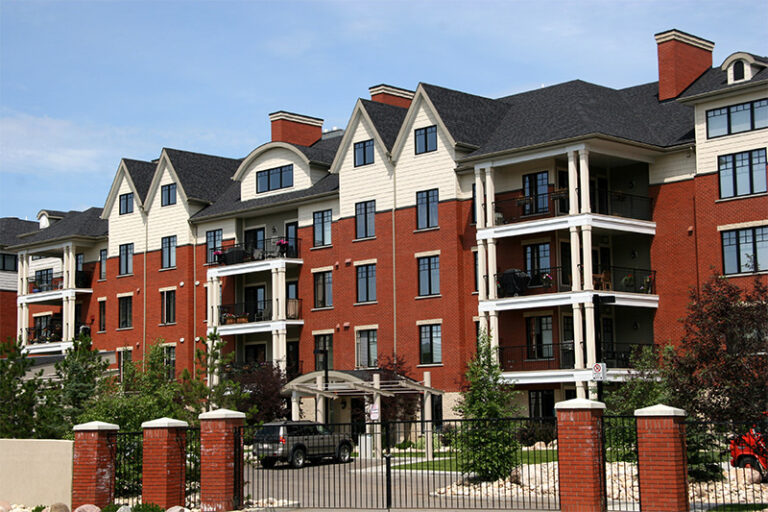
Investing in real estate can be a lucrative way to diversify your investment portfolio, but like all types of investments, it comes with risks. Regardless of the type of property, real estate requires a substantial amount of cash. Take a look at some important factors to consider when investing in real estate.

The Property Location

Location is the most important factor for profitability in real estate investing. Residential property valuations are affected by proximity to amenities, green space, scenic views, and the neighborhood’s status. Commercial property valuations are affected by proximity to markets, transportation hubs, highways, and tax-exempt areas. It’s important to consider the mid- to long-term view of how a location is projected to evolve over the investment period. Take the time to review the ownership and intended usage of the immediate areas where you are considering an investment. Investors can do this by contacting the town hall or public agencies responsible for zoning and urban planning. Looking at long-term area planning can help you determine the favorability or unfavorability of your plan for your investment property.

Something to consider when choosing an investment location is the local climate and weather conditions. The more extreme the weather conditions, such as hurricanes, heavy rains, hail, and strong winds, the harder the wear and tear on a property’s roof. The best way to keep your roof in good condition is to have a professional roofer inspect it for any warning signs of damage. Batterbee Roofing provides high-value home improvements for a fair, competitive price. The award-winning roof services of the roofers in The Villages include new roof installation, tile and shingle replacement, gutters, skylights, solar tubes, roof storm restoration, and attic ventilation. Expert roofing contractors have the skills and knowledge for any roofing job, no matter the roofing material, condition, or slant.

The Property Valuation

The property valuation is key for financing during purchase, listing price, investment analysis, insurance, and taxation. There are several commonly used real estate valuation methods. The sales comparison approach looks at recent comparable sales of similar properties both new and old. The cost approach, which is best for new construction, considers the cost of the land and construction minus depreciation. The income approach, which is best for rental properties, is based on the expected cash inflows.

Coming up with a down payment for an investment property isn’t easy, especially when you are between a property sale and a new purchase. Many real estate investors forgo traditional financing in favor of equity-based lending solutions that provide access to fast funds. When you search for “hard money lenders near me,” you’ll find that Northwest Private Lending offers a variety of lending solutions for residential and commercial real estate investors.

Hard money loans are a great option for purchasing cash-only listings or properties that don’t qualify for conventional loans, such as foreclosures, short sales, and flip properties. The private lender specializes in bridge loans that allow investors to purchase their next home before completing the sale of their current home. A hard money loan features a higher interest rate and shorter loan term than a conventional loan, and it’s secured by some form of collateral, usually the property being financed.

The Investment Purpose

It’s important to determine why you’re making a real estate investment, given the low liquidity and high-value investment in real estate. Consider your reason for the investment project and plan accordingly. Buy-and-self-use helps you save money on rent and enjoy the benefit of self-utilization while gaining value appreciation. Buy-and-lease provides regular income and long-term value appreciation, but being a landlord means being responsible for disputes and legal issues, managing tenants, and being responsible for repair work. Short-term buy-and-sell is a good option for a quick, small to mid-size profit on a property that’s undergoing construction and will be sold at a profit. Long-term buy-and-sell focuses on large intrinsic value appreciation over time, which can complement long-term financial goals like retirement.

When investing in real estate, it’s important to consider the property location, the property valuation, and the investment purpose.

Risk has always been a necessary evil of investing. Still, in today’s post-COVID world, our investment options are more unpredictable than ever.

Without warning, your investment may be affected by supply chain disruptions and new COVID regulations. As such, many people are too scared to invest in anything. However, you do still want passive income to give you a good monthly cash flow for your future retirement, so how do you start?

Today, though, we’re going to help you overcome your investment worries. Below, we list several types of investments that are (mostly) low-risk and highly profitable.

Plus, you don’t have to be a stock market wizard to get started. In fact, most of these options have nothing to do with stocks. Read on to discover the best investment options in 2022.

  1. CDs

If you have time to take the slow track, fewer investments are safer than CDs (Certificates of Deposit). Put simply, CDs are basically high-yield savings accounts that you can’t access until they mature. Even more simply, it’s like burying a lump sum of money and then digging it up with interest several months/years later.

Many CDs mature in as little as 6 months. If you desire, though, you can choose a maturity date up to 5 years away.

CDs are virtually risk-free. You can even ladder your CDs to create a recurring payout.

For instance, you can start new CDs, with the same term, every month. Then, as they mature, you get a recurring monthly payout.

  1. High-Yield Savings Accounts

Having a high-yield savings account is like getting free money. What we mean is, you should already have a savings account for emergencies, no matter what. So, while this money is just sitting around, it could be earning interest at a high rate.

Generally, though, you need a sizeable opening balance and good credit to open a high-yield savings account. But anyone who’s qualified should definitely get one.

  1. Series I Bonds

Inflation is a huge concern with standard saving bonds. Namely, by the time you collect, the interest earned may actually be less than the cost of inflation. I-bonds, on the other hand, actively offset the cost of inflation by adjusting their rates biannually.

  1. Index Funds

Index funds are a low-cost, minimal-risk method of stock market investing. If you’re considering investing in stocks for the first time, start with index funds. Furthermore, you can use an investment platform like Monex Securities for additional help with your index fund investment.

  1. Dividend Stock Funds

Most types of stocks only make you money if you wait for them to appreciate and then sell them. But dividend stocks can make you money while you hold onto them. Specifically, the company that issues the stock pays a percentage of its profits to its shareholders as dividends.

  1. Rental Housing

Real estate investment is extremely lucrative in general. But it’s also expensive and risky. Renting out your investment properties earns you extra income, which protects you against potential risk.

  1. Crypto Investment

Cryptocurrency offers a more intense investment experience than the other options on our list. If you’re looking for big risks, big rewards, and dramatic ups and downs, invest in cryptocurrency.

Consider These Types of Investments

Don’t let fear stop you from building your investment portfolio. Instead, minimize your risk with the types of investments listed above. 

Next, get the latest tips and news about trading platforms, real estate investment, cryptocurrency, and more. Find this and other investment advice in our Investing Archives.