
Category

Business

Category

As the cryptocurrency market continues to expand, governments around the world are grappling with the challenge of how to regulate these digital assets. The decentralized and borderless nature of cryptocurrencies poses a unique set of challenges for policymakers, who must balance the protection of investors, prevention of illegal activities, and encouragement of technological innovation.

The Regulatory Spectrum

Countries have taken a variety of stances on cryptocurrency regulation, ranging from outright bans to fully embracing them with comprehensive legal frameworks. Some nations, like Japan and Switzerland, are creating favorable environments for crypto businesses by offering clear tax policies and creating regulatory sandboxes. Others, such as China and India, have periodically moved to restrict or ban cryptocurrency activities altogether.

Consumer Protection and Market Integrity

A primary concern for governments is protecting consumers from fraud and ensuring the integrity of markets. Regulatory bodies in the United States, such as the Securities and Exchange Commission (SEC), have been actively policing the crypto space to combat fraudulent initial coin offerings (ICOs) and to ensure that crypto assets that qualify as securities are appropriately registered.

Anti-Money Laundering and Counter-Terrorist Financing

Another major regulatory focus is the prevention of money laundering and terrorist financing. Cryptocurrencies can be used to transfer large amounts of money across borders rapidly and with relative anonymity. As a result, international bodies like the Financial Action Task Force (FATF) have issued recommendations that member countries implement stringent anti-money laundering (AML) controls on cryptocurrency exchanges and wallet providers.

Taxation

Taxation is also a crucial aspect of cryptocurrency regulation. Since digital assets can be traded, spent, and invested, governments want their share of the resulting gains. In the United States, for example, the Internal Revenue Service (IRS) treats cryptocurrencies as property for tax purposes, meaning that capital gains tax applies to crypto transactions.

Balancing Innovation and Risk

While the aim of regulation is typically to reduce risk, there is a growing recognition of the importance of not stifling innovation. Blockchain technology, which underpins cryptocurrency, holds significant potential beyond financial applications, including supply chain management, healthcare, and voting systems. Governments are therefore seeking ways to harness the benefits of blockchain while managing the risks associated with cryptocurrencies.

Global Coordination

The cross-border nature of cryptocurrencies means that effective regulation requires global coordination. This has led to discussions among international regulators at forums such as the G20, where member nations have agreed to work towards common regulatory standards. This cooperation aims to prevent regulatory arbitrage, where businesses move to jurisdictions with less stringent regulations.

The Road Ahead

With the rapidly evolving nature of the crypto space, governments will need to continue adapting their regulatory frameworks. The rise of decentralized finance (DeFi), non-fungible tokens (NFTs), and central bank digital currencies (CBDCs) are just some of the developments that regulators will have to address in the years ahead.

Ultimately, each government’s approach to cryptocurrency regulation will depend on its specific priorities and values. However, the overarching goal remains the same: to create a safe and sustainable environment for the burgeoning crypto economy while ensuring that it does not become a haven for illicit activity.


If you are new to the business field and serious about starting for yourself, as a new chapter of your life, go here to make things easier. There are a lot of ideas to help you prepare when starting a new business, find out all of them for you to prepare for this new venture.

Good business idea

Do you wonder how to start a new business easier than you think? Like any other successful business, you want to ensure you have a good idea, first thing. From there, build a product/service that solves the needs of consumers. Before jumping into anything, you want to ensure you do research. It is crucial because only estimated companies survive the first year of operation.

Whether you start a business during your retirement and looking to earn more cash, you find accurate startup growth strategies. Never be afraid of being the sole proprietor and start the company by yourself because you can grow and hire employees later on.

For you to get ideas, think of the easy startup options:

  • Business Consulting
  • Event planning
  • Cleaning services
  • Bookkeeping and tax preparation
  • Jewelry making
  • Personal training
  • Copywriting services
  • Computer training
  • Music Lessons
  • Graphic design
  • Financial planning
  • Landscaping
  • Photography

Researching the business idea

After you have a small business idea, the next step is seeing if it is worth pursuing. Rely on the market research. To do this, you must ensure to analyze the competition. It helps you gauge the interest of the audience and deal with the following:

  1. Understand customer’s needs
  2. Identify the potential problems with the product/service
  3. Lessen financial losses by helping you get informed with decisions
  4. Find niche markets that you may have known
  5. Set goals that guide your business

How do you conduct research successfully?

  • Identify the target customers. You can do it by looking at who benefits from the product. You will also want to look at the factors, like:
    • Age
    • Location
    • Marital status
  • Engage your audience. Once you know who the target customers are, do these:
    • conduct surveys
    • talk to people directly

The information gathered helps gain more feedback. Never overlook social media, which is the perfect place to contend with them.

  • Look at competitors. Analyzing the competing products/services gives you an idea of what exists in the industry. It helps you find ways to enhance your ideas. It helps target weaknesses in your product/service before spending time and money to create it. Ensure to note the competitor’s prices during the process, which gives you the range of how much the customers spend on similar products.

Make your new business “official”

After working hard researching the idea and knowing it can last in the market, it is time to take the business to the next level by making it official. To do this, you need to work on these:

  • Register the business with your state
  • Secure the right licenses and permits
  • Get a tax ID number

With these steps, it helps you create a brand name that nobody can use. Once official, you can set up an office and make an online business presence.

Finding and financing your dream home can be a daunting task, yet with the guidance of a knowledgeable mortgage broker, the process turns out to be a lot smoother and more manageable. A mortgage broker fills in as an intermediary among you and potential loan specialists, assisting you with navigating the intricacies of the columbus mortgage market and securing the best financing options for your requirements.

Understanding Your Financial Situation:

One of the most important phases in the home purchasing process is assessing your financial situation. A mortgage broker will work intimately with you to evaluate your pay, assets, record as a consumer, and relationship of outstanding debt to take-home pay to decide how much house you can afford and what sort of mortgage loan is most ideal for your financial circumstances. By gaining a clear understanding of your financial situation, a mortgage broker can assist you with setting realistic goals and fostering a personalized financing strategy.

Exploring Financing Options:

When your financial situation has been assessed, columbus mortgage broker will assist you with exploring financing options from a variety of banks. Mortgage brokers have access to an organization of moneylenders, including banks, credit associations, and mortgage companies, and can search around to find the best loan terms and financing costs for your requirements. Whether you’re searching for a conventional loan, FHA loan, VA loan, or other financing choice, a mortgage broker can assist you with comparing options and picking the right loan for you.

Providing expert advice and support:

Quite possibly the most valuable help that a mortgage broker gives is expert advice and support all through the home purchasing process. Mortgage brokers are profoundly knowledgeable about the mortgage market and can answer any inquiries you may have about the process, including loan terms, loan costs, closing expenses, and more. They will also advocate on your behalf, negotiating with moneylenders to get the most ideal terms and guaranteeing that your advantages are constantly safeguarded.

With expert advice from a knowledgeable mortgage broker, you can unlock your dream home and achieve your homeownership goals with certainty and peace of mind. From assessing your financial situation to exploring financing options, navigating the mortgage process, and providing continuous support and guidance, a mortgage broker is your trusted partner in the home purchasing venture. Contact a mortgage broker today to learn more about how they can assist you with unlocking your dream home.

The crypto presale market offers tantalizing opportunities for heavy profits but also requires thoughtful strategy broad with a diversified portfolio to explore various up-and-coming projects? Or concentrate your capital into one or two tokens poised to explode? There are persuasive cases on both sides.

Explore argument

The core logic favouring an exploratory strategy is simple crypto space moves at warp speed, and yesterday’s underdogs become today’s top dogs seemingly overnight. By scattering small to mid-sized bets across a spectrum of assets, you give yourself multiple tickets in the brutal token survival and appreciation tournament. Tickets will prove worthless. But a few might offer spectacular payouts that more than compensate for several strikeouts. For example, spreading $5K across 10 early phase tokens in 2021 could have netted you spots in Solana at $3, Luna at $0.4, or Avalanche at $2. Hitting just one of those moonshots would have delivered 10x to 100x returns on your total portfolio.

Exploit argument 

The concentration and conviction maximize the upside when you bet right. Throwing 80-90% of your capital behind a single high-confidence pick leaves plenty of dry powder to average down on dips. And Glory waits if your token selection takes off.  For a timely example, consider those investors going heavy on Aptos in the 2022 bear market. Instead of dabbling in 8-10 assets, they zeroed in on one deep value play with a solid team and intriguing tech prospects. Their exploit strategy could deliver a 50x return in 12 months.

Optimizing the core tradeoff  

  1. The most effective crypto investors blend both models using a barbell approach. This entails allocating a small portion of capital (say 10-30%) toward moonshot assets while concentrating the majority on your highest-conviction picks.
  2. The exact balance depends on your risk tolerance and conviction level in core holdings. Just recognize that overly distributed portfolios lower your upside the same time, betting every chip on one or two assets courts bankruptcy.
  3. Without the foundation of a few solid base hits, home runs alone won’t win the game. But with all singles and no swings for the fences, your rally capacity remains limited. Adjust the dial between exploration and exploitation to suit your strategy.

Managing a blended portfolio

  • Size moonshot bets appropriately– Limit lottery tickets to amounts you truly afford to lose, like 2-5% per speculative play. How to Buy Retik Presale? The crypto graveyard overflows with reckless all-in gambles on half-baked projects.
  • Focus on fundamentally sound basal assets- Vet your core holdings thoroughly, favouring battled-tested teams, robust communities, and differentiated tech with real-world use traction. These assets weather bear markets and deliver more predictable if less epic gains.
  • Rebalance with price action- As your moonshot assets multiply, peel some profits to de-risk your position size or reinvest in proven gainers. Let runners run when they take off, but monitor portfolio allocation drift.
  • Limit dilution- Adding new fliers becomes tempting when the market rolls. But asset bloat kills performance, especially in basals comprising over 50% of your portfolio. Master conviction before chasing the next hot token.
  • Buy crossover breakouts- Sometimes lottery tickets transition to core holds after major price discovery unlocks real staying potential. Spot these momentum crossovers early and exploit with size.

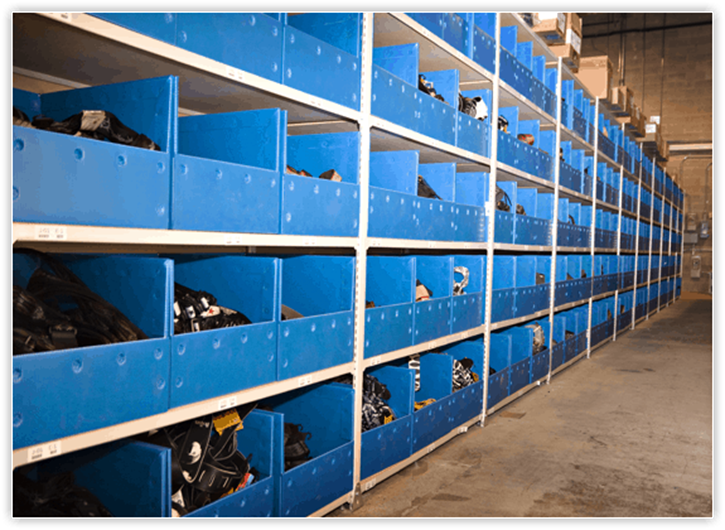
Those familiar with warehouse operations understand the importance of selecting the right bins. Far more than mere storage solutions, flexible containers can go a long way toward building more flexible, agile storage and logistics systems that can easily adjust to changing needs or evolving products.

Much like optimizing your physical layouts and planning your inventory, selecting the correct warehouse bins plays a huge role in how efficient an operation ends up being. Once you find the right solution and products, reusable bins can offer significant advantages at almost every stage of the logistics process.

What are the Advantages of Corrugated Plastic Warehouse Bins?

Corrugated, reusable plastic containers can benefit a variety of different industries and business sectors. In warehousing specifically, corrugated plastic bins have five core advantages over the alternatives.

1. Potential Cost Savings

Being able to reuse your custom containers, even if product and storage needs change over time, can be a significant cost savings. Instead of continually reordering new bins, you can rest assured that your investment will continue to serve your needs over time. That’s especially true for corrugated plastic when compared to cardboard. Cardboard bins may cost less up-front but will drastically increase your future costs as they’ll require constant reordering.

2. Increased Longevity, Durability and Impact Resistance

Reusable plastic containers last much longer than alternatives like cardboard or single-use plastics. They can also better sustain the heavy use and traffic in a typical warehousing operation, including the ability to survive restocking and local transportation.

3. Core Moisture Resistance Benefits

Corrugated plastic is naturally moisture resistant, which can be helpful in two ways. This property protects the container and its content from external moisture or water damage while also protecting it from other products that may ‘sweat,’ allowing you to keep your mixed warehouse inventory in good shape over time.

4. Stackability and Low Weight

Maximizing storage space in your warehouse has to be a continual priority. Corrugated plastic bins can help, thanks to their design. Efficient designs combined with the low weight of the containers can result in space optimization, both during transportation to the warehouse and while stored.

5. Customization Opportunities

Work with the right partner, and your corrugated warehouse bins can become as custom as you need them to be. Build and order containers to fit your needs and space while leveraging their multi-use capabilities to maintain storage flexibility.

How to Implement Warehouse Bins in Your Operations

Transitioning a manual warehouse to an Automated Storage and Retrieval System (AS/RS) is a complex process that involves careful planning, coordination, and implementation. Here are the steps required for a successful transition:

1. Identify Container Requirements

What storage capacity are you looking for? How will your new containers integrate with existing systems, and what retrieval speed do the containers need to accommodate?

2. Budgeting and Cost Analysis

Your new container systems have to fit into a comprehensive budget that includes any cost of AS/RS equipment, installation, training, and required infrastructure changes.

3. Determine the Function of Your AS/RS System

Your AS/RS functionality needs to fit within your warehouse requirements, including unit load, mini-load, or carousel systems. It must also work with your throughput requirements and expectations for scalability, flexibility, and compatibility with existing systems.

4. Make the Necessary Infrastructure Modifications

For your AS/RS system to work, first consider racking installation and any conveyor systems you might need to put in place. Flexcon can help you navigate this process, acting as a trusted advisor and partner to help your team implement these changes successfully.

5. Find the Right Flexcon Containers for a Warehouse Scale Up

Finally, it’s time to find the right containers to scale up your warehouse. Options from Flexcon include:

  • Warehouse Bins
  • Pallets
  • Attached Lid Containers
  • Stackable and Nestable Containers
  • Custom Plastic Bins and Trays
  • Shelving and Racking Options

Why Work With Flexcon?

At Flexcon, we understand that any warehouse operation can involve many complex processes. For example, you may need to fit out automated operations that move goods on conveyors and store them on multi-tiered rack systems. Or you may have a thriving warehouse operation that only uses warehouse pallets stacked on the floor. Either way, you’ll want a storage solution that maintains peak performance levels in your workflow.

Every business is unique, just like every logistics operation is unique. At Flexcon, we help our partners find the right solution for their specific challenge at a fair price.

That means developing long-term relationships with clients rather than just selling bins. It means building true partnerships so our clients can delegate their warehousing responsibilities to us. It’s also why we stay with our clients in the long run. The mutual benefit grows over time.